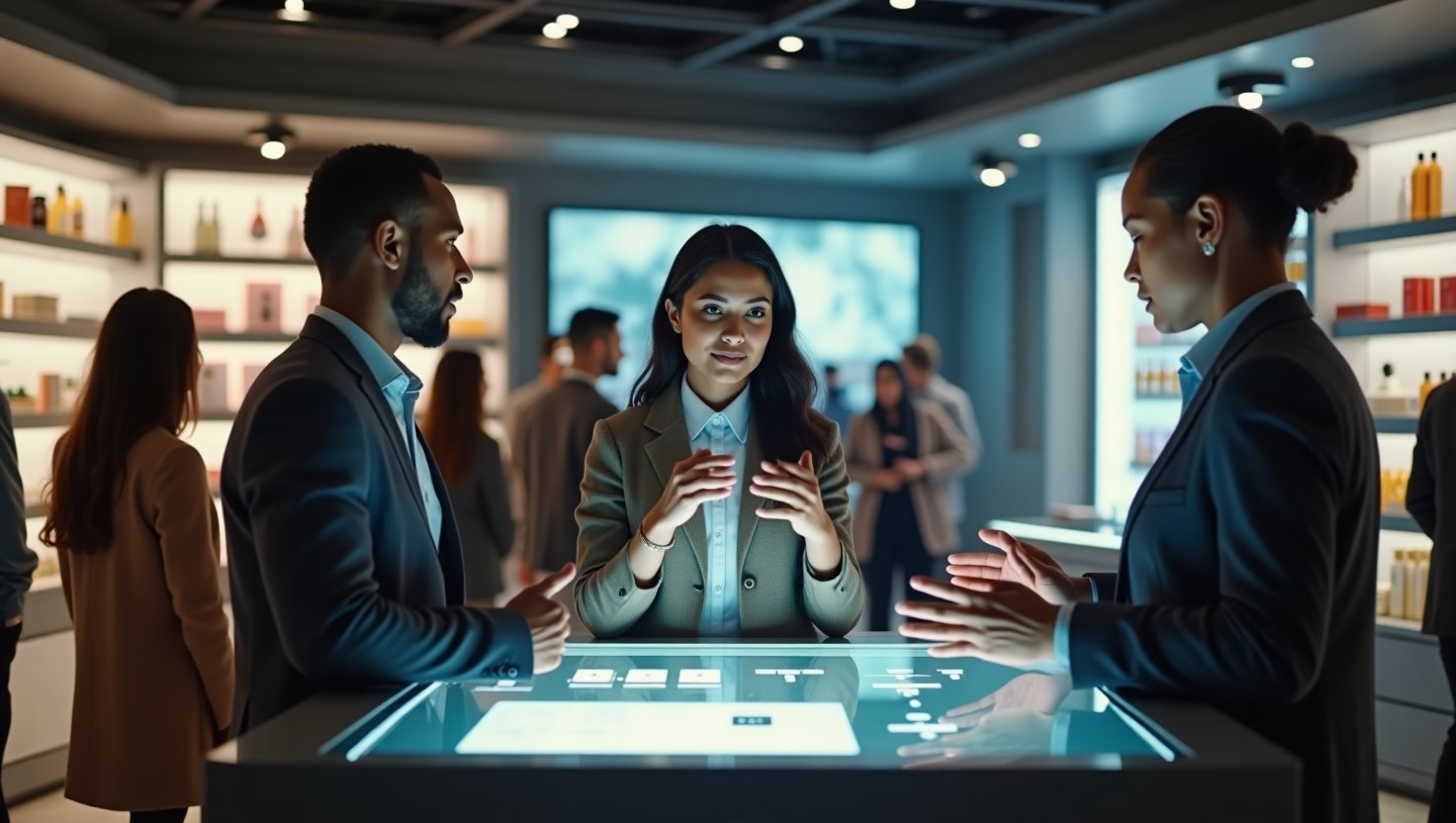


Integrating AI in Retail: Transforming the Shopping Experience
The retail industry has been perpetually evolving, and in the current digital era, the integration of Artificial Intelligence (AI) is transforming the landscape like never before. By embracing AI, retail businesses are discovering new ways to optimize operations, enhance customer experience, and improve efficiency. In this post, we delve into how integrating AI in retail applies to different facets like technology adoption, supply chain management, and retail optimization, drawing lessons from industry leaders like Walmart and Dollar General.
Embracing AI: The New Frontier in Retail
The adoption of AI in retail is not merely about staying competitive; it’s becoming the core catalyst for innovation. Technology adoption in this sector is characterized by deploying AI solutions to automate and enhance various facets of retail operations, leading to significant improvements in both customer experience and business efficiency.
Industry Examples and Trends
Take Dollar General, for example, which recently appointed Travis Nixon as the Senior Vice President of Artificial Intelligence Optimization. This strategic move is a part of their broader digital transformation effort aimed to elevate operations across the supply chain, store operations, and merchandising source. Another industry giant, Walmart, is setting the stage with AI-powered tools that facilitate in-store navigation and personalized shopping experiences. Tools like their generative AI assistant, Sparky, help customers make event-specific purchase decisions and enhance their shopping vivacity source.
The Supply Chain Revolution
Integrating AI in retail heavily impacts supply chain management, which is critical for operational efficiency. AI algorithms can forecast demand more accurately, manage inventory levels proficiently, and even optimize logistic pathways. By implementing AI, retailers can predict trends and mitigate risks associated with supply shortage or excess.
Supply Chain Optimization Analogy
Consider the supply chain as a complex highway system. Traditional methods like manual inspections are akin to highway patrols making decisions based on limited information and experience. AI, on the other hand, acts like a sophisticated traffic management system, observing traffic patterns in real-time, predicting conditions, and suggesting optimum detour routes. This allows for smoother, more efficient flow, akin to how AI optimizes product pathways from the manufacturer to the customer.
Retail Optimization: Enhancing the Customer Experience
The essence of retail optimization through AI lies in how it empowers retailers to tailor and refine every element of the customer’s journey. Whether it’s through advanced data analytics, AI-powered chatbots, or personalized recommendations, retailers are innovating to meet consumer desires more effectively.
Future Implications and Forecasts
As technology continues to evolve, the future of AI in retail promises even more personalized and immersive shopping experiences. From virtual fitting rooms to augmented reality applications, the possibilities are boundless. AI’s continuous integration will likely catalyze more significant shifts in consumer interaction, transforming every touchpoint into an opportunity for optimized engagement.
Conclusion
In conclusion, the integration of AI in the retail sector is unfolding as a crucial lever for enhancing productivity, boosting customer satisfaction, and driving overall business success. Companies such as Dollar General and Walmart illustrate the substantial gains of this transformation. As AI technology matures, those who harness its potential can expect not only to meet present-day consumer demands but also to set new precedents in retail innovation.
For those in the retail industry, understanding and adopting AI is no longer optional; it’s a strategic imperative to stay pertinent in a rapidly digitizing world. As retailers continue to explore AI capabilities, the industry is poised for a future characterized by increased customization, improved operational efficiencies, and enhanced customer-centric strategies.